


Bird-friendly Plants
Gardening with Purpose: How to Bring More Birds to Your Yard
Growing gardens for birds will help foster an entire ecosystem in your yard, and every living thing in it will thank you. Here's how!
.jpg)
As we face ongoing drought conditions in Denver, there’s more pressure than ever to transition traditional turf lawns into more eco-friendly alternatives. With a little bit of planning, you can create a beautiful, low-water landscape that also serves as a much-needed ecosystem for birds to thrive.
I’ve been transforming my yard since 2020, and the number and variety of birds that have settled in my space increases every year. I’ve gradually covered my lawn with woodchips (though you can solarize, till, cut the sod, or carefully use an herbicide to remove the turf), and while it’s easier now to find specific plants at local nurseries, I’ve been slowly filling the space with plants from friends, community swaps, and native plant society giveaways.
When you’re planting for birds, it’s not only important to incorporate different types of plants (flowers, trees, shrubs, and grasses) but also plants of different heights and levels (overstory, mid-story, and groundcover). Different birds have different needs, so the more options you provide, the better habitat you’re creating and the more feathered friends you’ll start to spot in your yard. Some plants are better options for seed-loving birds, some provide habitat for the insects that birds eat, some provide fruits, and some are simply places for the birds to rest, nest, and seek safety from predators.
On any given day, I can sit out on my patio watching the black-capped chickadees climb up the trunk of my silver maple, towhees dig around in the underbrush of my lilacs, magpies pluck my currants, hummingbirds sip nectar from my tall penstemons, and goldfinches pull the seeds from my sunflowers.
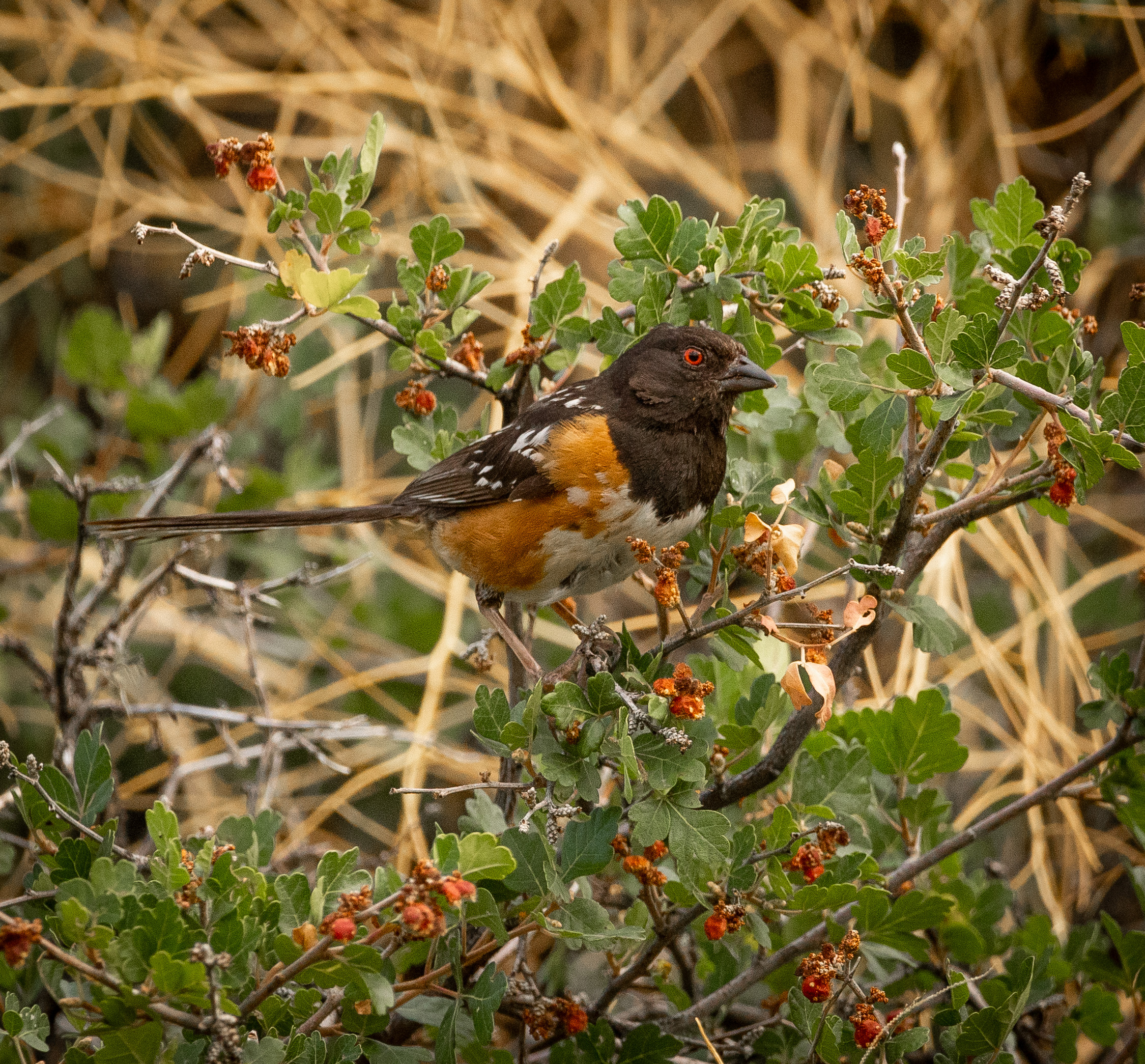
The bird visitors don’t stop coming when the summer season is over. I leave up my healthy stalks through fall and winter until the following spring. While I do find it aesthetically pleasing for off-season interest, it also provides a crucial habitat for bugs and small birds who need spots to stay warm and safe during snowy seasons.
Not sure which plants to grow? If you have a specific bird you’d like to see, do some research and find out what plants they frequent. Some good tree and shrub choices for the Denver area include Rocky Mountain juniper (Juniperus scopulorum) for its berries and shelter, Gambel oak (Quercus gambelii) for shelter and as a critical larval host for many insects, golden currant (Ribes aureum) for its berries and nectar-filled flowers, and rubber rabbitbrush (Ericameria nauseosa) for shelter and winter seeds. Flowers that offer nectar, insects, and seeds that grow well here are bee balm (Monarda spp.), Maximilian sunflower (Helianthus maximiliani), beardtongue (Penstemon spp.), yarrow (Achillea millefolium), and smooth blue American-Aster (Symphyotrichum laeve). If left over winter, grasses like blue grama (Bouteloua gracilis) and little bluestem (Schizachyrium scoparium) are good for seeds and year-round shelter.
If you’re growing in containers, finding plant combinations that look nice together isn’t as hard as it seems. Try grouping plants and using the following three elements in your plantings: a thriller (an eye-catching focal point), a filler (a small, spreading plant with a good color), and a spiller (something that drapes over the pot). Try Rocky Mountain columbine (Aquilegia caerulea) for a thriller, prairie zinnia (Zinnia grandiflora) for a filler, and wine cups (Callirhoe involucrate) as a spiller.
A few tips to get started:
- Make a plan. Taking the time to map out your landscape will help conserve water and save money down the road. Consider who uses your space and how they use it. If you have pets or young kids, make sure you aren’t planting things for birds near the areas where they like to play. Start with a site analysis and choose the right plants for the right place for the biggest impact. Make multiple plans until you have a layout you love.
- Start small. You don’t have to have a huge yard to attract birds, and you can also make a multi-year plan and build your garden gradually. New plants, even the xeriscape-friendly or low-water ones, need regular water during their first year while they get established. If there are water restrictions, planting a lot of new thirsty things isn’t advised. Take the time to plan out your space and start little by little.
- Don’t use pesticides. While it might be tempting to use pesticides to get rid of your bug problems in the garden, it’s important to remember that those bugs also serve as food for birds. (Many seed-, nut-, and fruit-eating birds feed invertebrates to their young!) Some birds consume thousands of insects every day, and if you poison their food source, you run the risk of making the birds sick, too.
- Provide water. If you’re encouraging birds to come to your yard with food and habitat, make sure that you leave some places for clean, fresh water. Clean the bowl regularly to prevent the spread of disease and bacterial growth. Pro tip: get a bubbler so that your bird visitors can have some moving water.
As we pass the peak of summer and move towards the season of reflection, when birds and other wildlife begin their preparations for the next cycle of rest and blooming, let us take the time to consider how we can grow into more loving stewards of future generations. When doing so, remember - no matter how much space you’re able to dedicate to birds, you can make an impact. Be flexible and patient with yourself as you convert your space. Growing things specifically for birds will help foster an entire ecosystem in your yard, and every living thing in it will thank you.
The allure of off-the-beaten-path travel
Lorem ipsum dolor sit amet, consectetur adipiscing elit ut aliquam, purus sit amet luctus venenatis, lectus magna fringilla urna, porttitor rhoncus dolor purus non enim praesent elementum facilisis leo, vel fringilla est ullamcorper eget nulla facilisi etiam dignissim diam quis enim lobortis scelerisque fermentum dui faucibus in ornare quam viverra orci sagittis eu volutpat odio facilisis mauris sit amet massa vitae tortor.
Unveiling the charm of lesser-known Destinations
Orci sagittis eu volutpat odio facilisis mauris sit amet massa vitae tortor condimentum lacinia quis vel eros donec ac odio tempor orci dapibus ultrices in iaculis nunc sed augue lacus.
- Lorem ipsum dolor sit amet consectetur facilisi etiam dignissim diam quis enim
- Mauris aliquet faucibus iaculis dui vitae ullamco sit amet luctus
- Posuere enim mi pharetra neque proin dic rhoncus dolor purus non enim
- Dui faucibus in ornare posuere enim mi pharetra neque proin dicit
Finding solitude in hidden gem locations
Lorem ipsum dolor sit amet, consectetur adipiscing elit ut aliquam, purus sit amet luctus venenatis, lectus magna fringilla urna, porttitor rhoncus dolor purus non enim praesent elementum facilisis leo, vel fringilla est ullamcorper eget nulla facilisi etiam dignissim diam quis enim lobortis scelerisque fermentum dui faucibus in ornare quam viverra orci sagittis eu volutpat odio facilisis mauris sit amet massa vitae tortor condimentum lacinia quis vel eros donec ac odio tempor orci dapibus ultrices.
The thrill of discovering untouched natural beauty
Dolor sit amet, consectetur adipiscing elit ut aliquam, purus sit amet luctus venenatis, lectus magna fringilla urna, porttitor rhoncus dolor purus non enim praesent elementum facilisis leo, vel fringilla est ullamcorper eget nulla.
- Lorem ipsum dolor sit amet consectetur tempor orci dapibus ultrices
- Mauris aliquet faucibus iaculis dui vitae ullamco elementum facilisis
- Posuere enim mi pharetra neque proin dic fermentum dui faucibus in ornare
- Purus sit amet luctus posuere enim mi pharetra neque proin dic
“Ut enim ad minim veniam, quis nostrud exercitation ullamco laboris nisi ut aliquip ex ea commodo consequat uis aute irure dolor in reprehenderit in voluptate velit”
Exploring cultural marvels off the tourist radar
Donsectetur adipiscing elit ut aliquam, purus sit amet luctus venenatis, lectus magna fringilla urna, porttitor rhoncus dolor purus non enim praesent elementum facilisis leo, vel fringilla est ullamcorper eget nulla facilisi etiam dignissim diam quis enim lobortis scelerisque fermentum dui faucibus in ornare quam viverra orci sagittis eu volutpat odio facilisis mauris sit amet massa vitae tortor condimentum lacinia quis vel eros donec ac odio tempor orci dapibus ultrices in iaculis nunc sed.

.jpg)